Lessons from Ireland/Northern Ireland for Our Political Moment
Standing in Northern Ireland, listening to stories from people who had lived through the violence of the “Troubles,” I was struck by a sobering realization: long before violence erupts in the streets, it often begins with words.
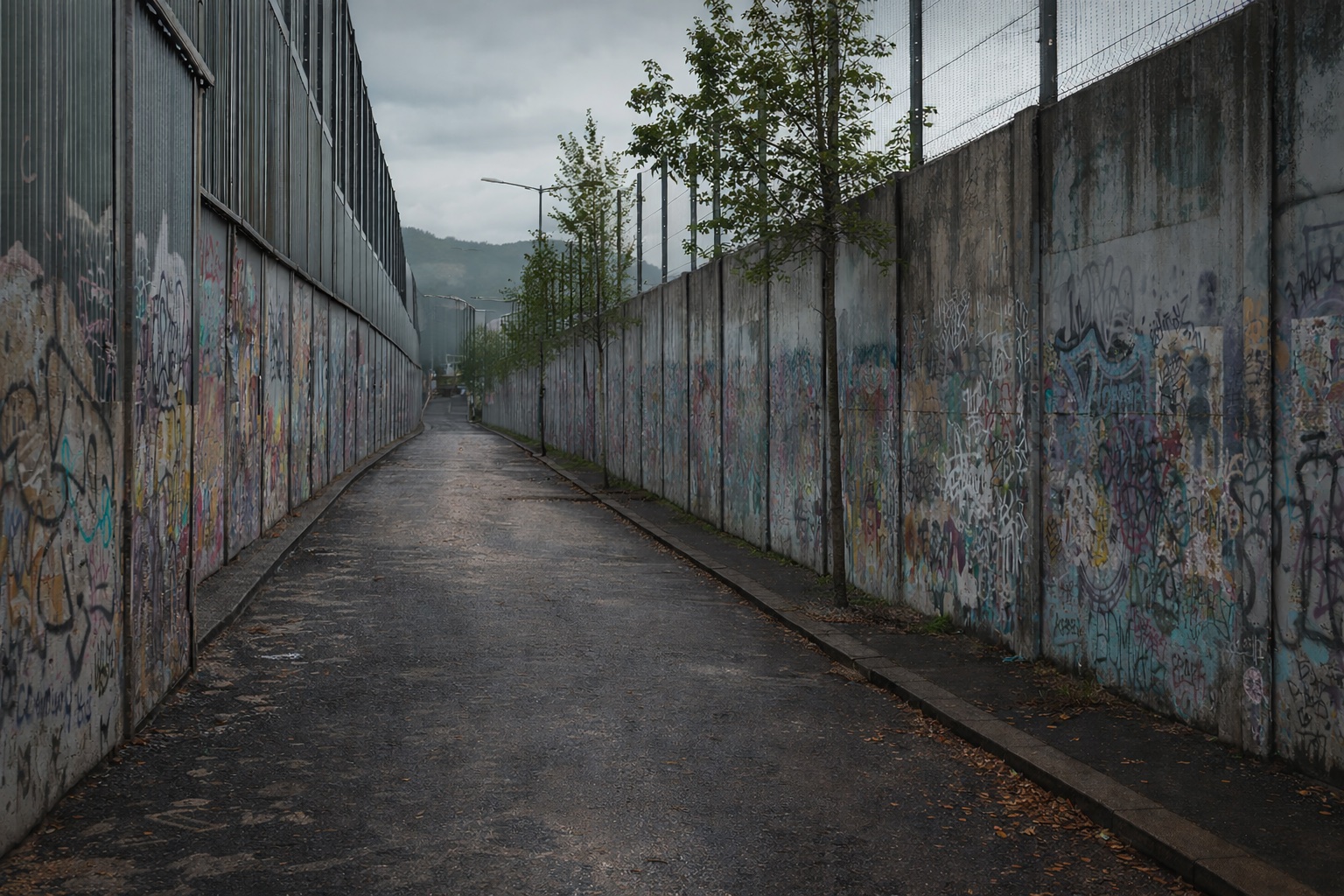
This month I had the privilege of traveling to Ireland and Northern Ireland with the Telos Group to meet with individuals working to build peace and reconciliation after decades of conflict from 1968–1998. The “Troubles” brought immense suffering, loss, and division to the island. Yet many of the people we met are now courageously working to heal those wounds and cultivate a future shaped by reconciliation rather than resentment. As we listened to their stories, one theme surfaced repeatedly: the profound power of language. Words can cultivate violence—but they can also nurture healing.
Several people shared that they have been listening carefully to the rhetoric emerging from the United States. From their experience, they recognize patterns of language that once contributed to their own conflict. Their concern was not primarily political—it was pastoral and deeply human. They have seen how language can slowly prepare a society for division and violence.
Violence rarely begins with weapons. It begins in the heart and mind.
Scripture notes this principles clearly. "The words of the reckless pierce like swords, but the tongue of the wise brings healing." Proverbs 12:18 (NIV) When hearts become filled with contempt, fear, or hostility, those realities inevitably spill out into words. And when such language is repeated often enough—especially by leaders—it can reshape how people perceive one another.
History provides sobering examples.
During the Rwandan genocide, Hutu leaders referred to their Tutsi neighbors as “cockroaches” (Inyenzi). Cockroaches are pests—creatures to eliminate. Tutsis were also described as “snakes” (Inzoka), parasites (Ba rutemayeze), and traitors (Ibyitso). Such language provoked images and emotions which resulted in viewing neighbors not as men, women, and children with whom life was shared, but rather as threats to be removed. Similarly, in Nazi Germany, Jewish citizens were frequently described as “parasites” and “vermin.” Such language helped prepare the social imagination of a nation to tolerate cruelty and violence. Dehumanizing language does something powerful: it erodes empathy. When people are portrayed as pests, enemies, or threats, it becomes easier to justify treating them harshly—or even violently.
This is why it is deeply troubling to see such rhetoric becoming increasingly common in American public discourse. Regardless of our political affiliations, our shared humanity and citizenship should compel us to expect more from our leaders—and from ourselves. Deep disagreements about policy are inevitable in a democratic society. But disagreement must never lead us to speak about others as if they are less than human.
Yet we increasingly hear language that describes immigrants and refugees as “animals,” “parasites,” or “subhuman.” Political opponents are sometimes labeled “scum,” “vermin,” or “the enemy from within.” Such words do more than insult—they reshape how people perceive entire groups of neighbors. When this language becomes normalized, it creates a cultural environment where harsh treatment—even the denial of basic rights—can begin to seem justified.
I live in Portland, Oregon, a city that has been a focal point of protests related to immigration enforcement and federal presence. There have certainly been tensions, and some individuals have behaved poorly. Yet the vast majority of those gathered outside immigration facilities are peaceful citizens concerned about the treatment of immigrants and the erosion of due process. Many are ordinary community members. Some are churchgoers. Others are older adults quietly standing in witness. I personally know grandmothers who attend Bible studies and stand peacefully outside the facility to make their concerns known.
Compassion for the vulnerable does not deny the responsibility of governments. The rule of law matters. Thoughtful immigration policy matters. National security matters. But these important concerns can—and must—be addressed in a way that honors the dignity of every human being. We may disagree about policies or methods. That is part of civic life. But when protesters are broadly described as “terrorists” equivalent to organizations like ISIS, language ceases to clarify reality—it distorts it. Such rhetoric transforms fellow citizens with concerns into existential threats.
Words matter.
The words we use shape how we see one another. They influence what we believe is justified. And over time, they can either deepen division or open pathways toward understanding. A highlight of my time in Belfast was meeting with ex-combatants who were once enemies, now working together to foster peace and mutuality in a country still recovering from the scars of violence. They would now describe themselves as friends.
Each of us carries responsibility in this cultural moment.
We must examine the language we use when speaking about others—especially those with whom we disagree. Reducing entire groups of people to degrading labels only deepens division and increases the potential for violence. Our conversations should focus on policies, actions, and ideas. We can debate vigorously while still honoring the humanity of those across the table.
In a culture increasingly shaped by contempt, we have an opportunity to model something different. We can become people whose words reflect courage, humility, and compassion. We can hold ourselves and others accountable for the impact of their words. And in doing so, we may help cultivate the kind of society where disagreement does not lead to dehumanization—and where peace remains possible.